Skip to content
Gas Furnace Guide · 2026

A better furnace starts with a better plan for your home.

Compare single-stage, two-stage, and fully modulating gas furnaces in plain language. See what changes comfort, sound, blower electricity use, and long-term value—then see why the team putting it in matters as much as the furnace itself.

Key Takeaways

  • Grove planning ranges for a straightforward high-efficiency furnace replacement begin around $6,500; the written scope confirms the final price
  • Single-stage, two-stage, and modulating equipment solve different comfort and budget needs
  • Venting, condensate, ductwork, gas, electrical, access, controls, and removal can change the scope
  • A heat-pump or dual-fuel comparison depends on the home, electrical service, ducts, backup plan, and current program eligibility
  • Gas permits and inspections are confirmed for the specific address and work—not assumed from a generic rule
Comparing installers as well as furnaces? Use the homeowner checklist
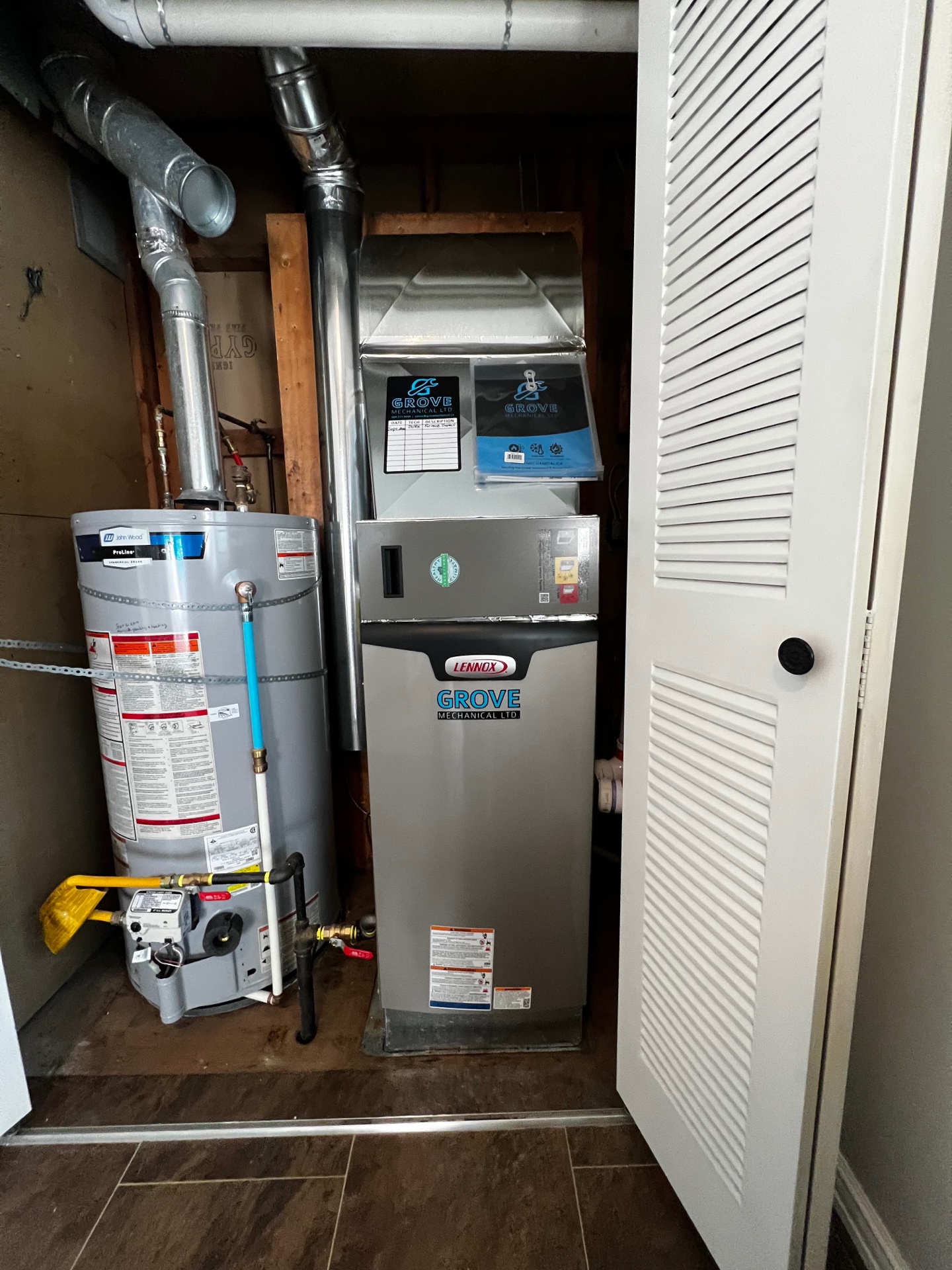
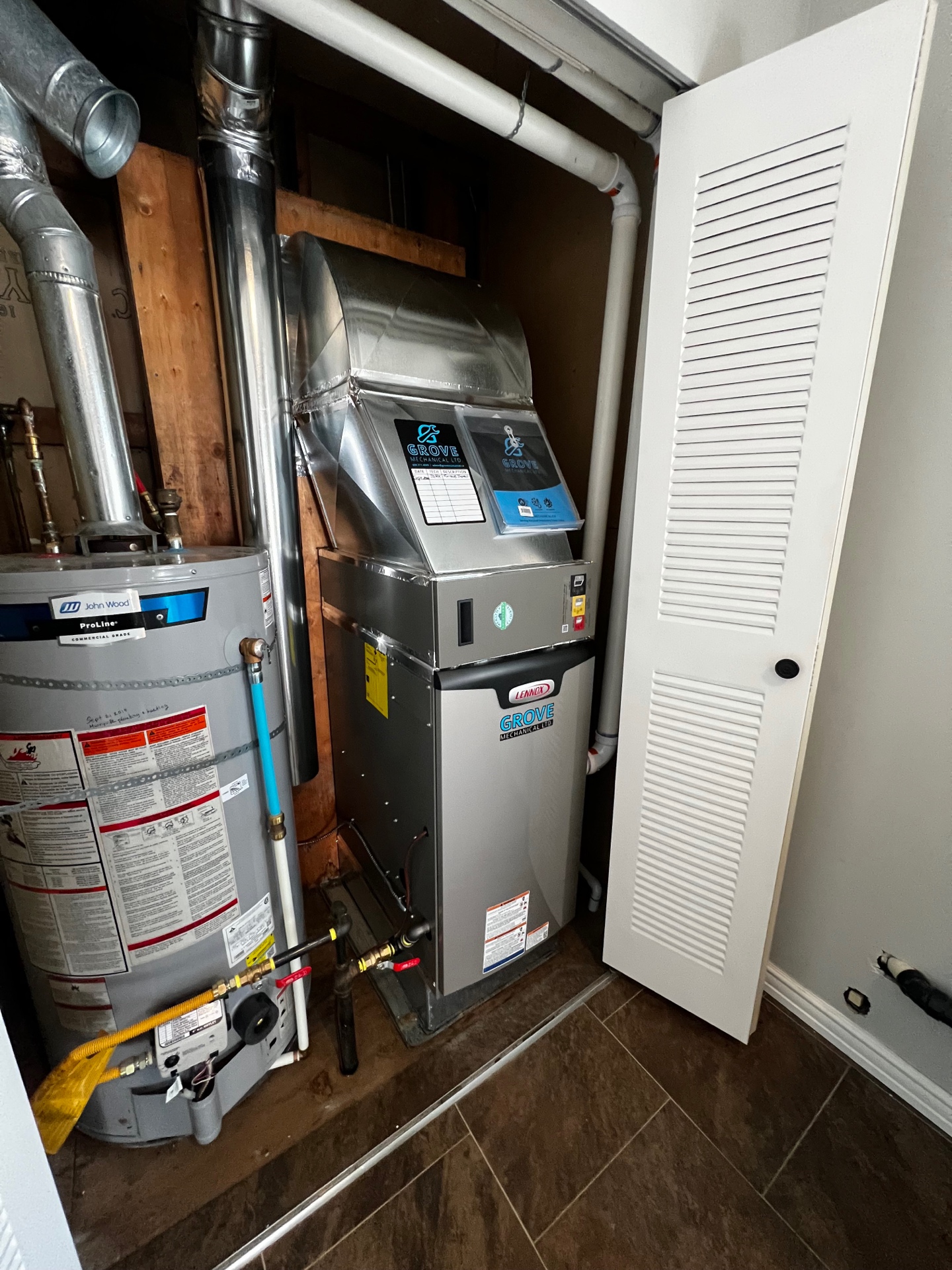
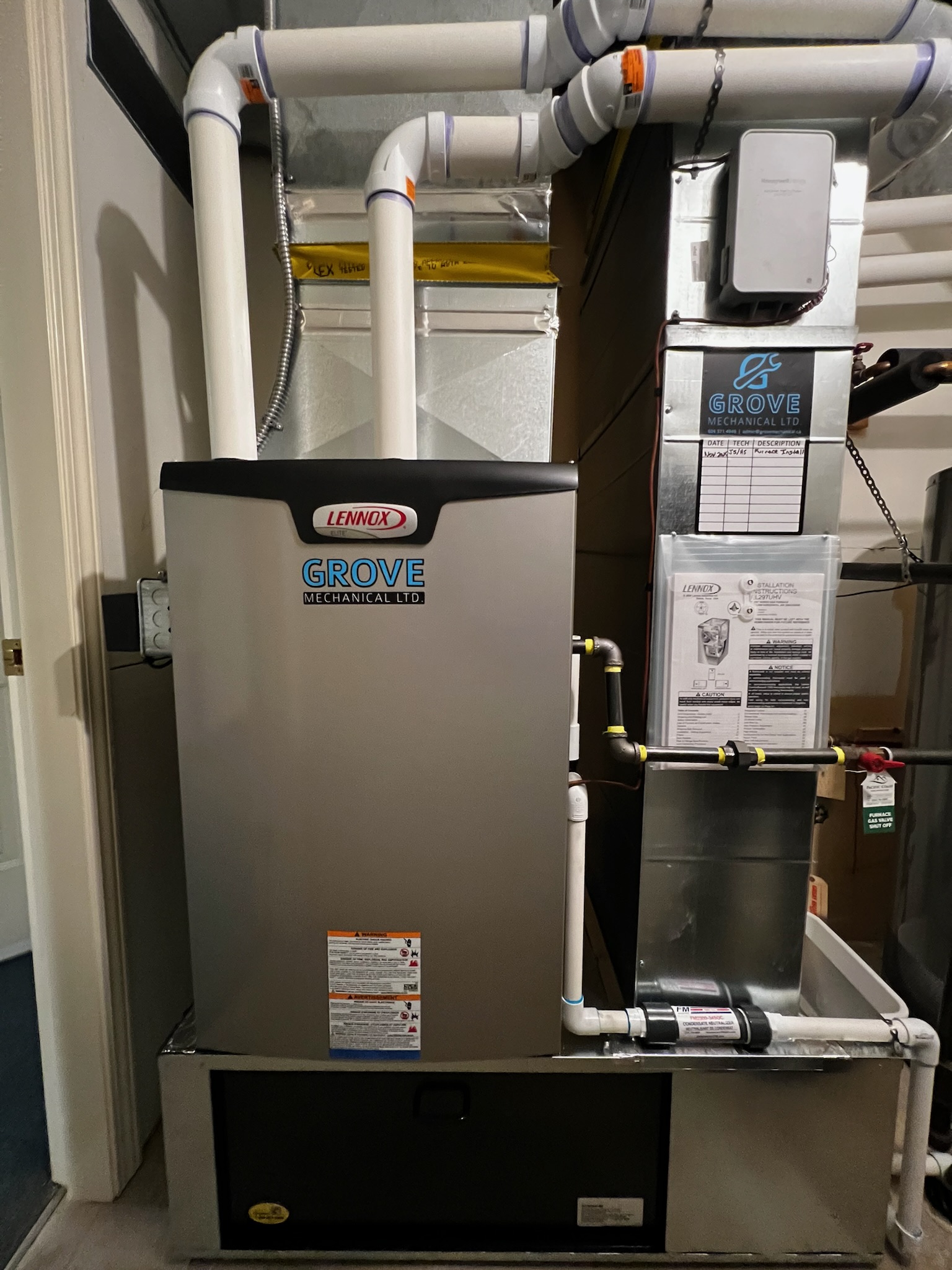
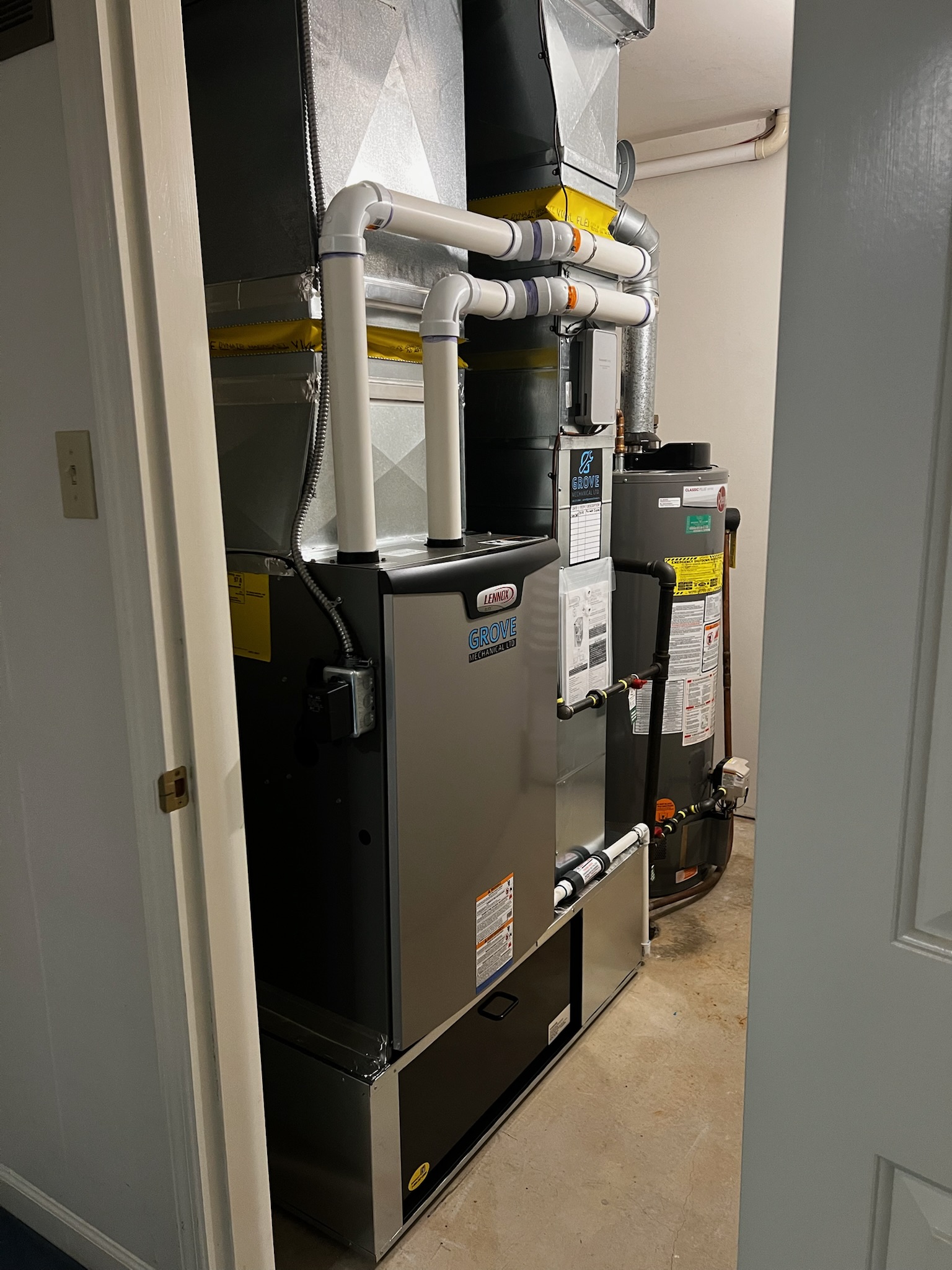
Grove Mechanical Lennox high-efficiency furnace installation with PVC venting and custom ductwork

Real Grove Mechanical installation

A clean mechanical room is more than appearance. It reflects planning, accessible service clearances, air-path design, and careful commissioning.

The homeowner decision guide

Three kinds of furnace. One choice built around your home.

The difference is not just efficiency. It is how the furnace delivers heat, how air moves through the home, and how the system feels on a normal winter day. Here is the simple version.

01

Single-stage furnace

One heat level: full output when it runs, then off.

A good fit when:

A dependable, high-efficiency starting point when budget or a shorter ownership horizon matters most.

  • A solid choice when correctly sized, installed, and commissioned.
  • The burner operates at full heating output whenever the thermostat calls.
  • The full-on/full-off pattern can create more noticeable temperature swings in larger or multi-level homes.
  • A fixed-speed blower can draw more electricity when it runs at full speed; actual cost depends on motor, ductwork, settings, and run time.
02

Two-stage furnace

Two heat levels: a gentler low stage plus full heat for colder conditions.

A good fit when:

Many Fraser Valley homeowners who want a meaningful comfort upgrade without moving to a full communicating system.

  • Runs at a lower heating output during milder conditions, with full heat ready for colder weather or faster recovery.
  • Longer, gentler heating cycles can reduce the hot-and-cool feeling associated with a full-on/full-off furnace.
  • Paired with a variable-speed blower, it can soften starts, lower sound, and support steadier airflow.
  • A strong middle ground for quietness, comfort, efficiency, and upfront investment.
03

Variable-capacity furnace

Fully modulating heat: many small burner adjustments instead of one or two fixed levels.

A good fit when:

Long-term homeowners who want the quietest, most even comfort from a matched premium system.

  • The gas valve adjusts heat output in small increments to better match the home’s real-time demand.
  • A communicating thermostat and compatible variable-speed blower work with the furnace as one comfort system.
  • Longer low-output operation provides the most stable temperature profile and less start-stop sound.
  • Variable capacity describes burner output. Variable speed describes how the blower moves air—they are related, but not the same feature.
The underrated upgrade

The blower motor is not a footnote.

Your furnace makes heat, but the blower distributes it. The motor that moves the air affects sound, comfort, filtration, summer cooling, and the electricity used whenever the fan runs.

A transparent BC electricity example

If a lower-speed blower avoids 300 watts for 1,000 fan hours in a year, that is 300 kWh. At BC Hydro’s published 11.87¢–14.08¢ tiered energy charges, that works out to about $36–$42 per year. It is an illustration, not a promise: motor wattage and fan hours vary by home and setup.

Variable speed means smoother airflow.

Instead of operating at one full speed, a variable-speed ECM blower can ramp airflow up and down. That can reduce the abrupt startup rush, support gentler circulation, and use less blower electricity at lower speeds when the system is designed and configured correctly.

Variable capacity means the burner matches demand.

Do not confuse it with a variable-speed fan. Variable capacity describes the amount of heat the burners produce. A fully modulating system combines many small burner adjustments with a matched blower and communicating thermostat for the quietest, most even heating profile.

What the published guidance supports

ENERGY STAR identifies higher-efficiency blower motors as a furnace feature. Lennox describes variable-speed motors as using up to 25–50% less motor energy than conventional single-speed motors in its equipment comparison. Those are component-level comparisons, not a whole-home savings guarantee—so Grove Mechanical will use the selected equipment and your home’s expected runtime for any project-specific discussion.

Quick Reference

Furnace Replacement Cost in BC — 2026 Price Table

These are Grove planning ranges, not a universal quote. The written assessment confirms the equipment, capacity, access, venting, drainage, ductwork, permit, removal, controls, and warranty scope for the home.

System TypeHome SizeInstalled Cost (All-In)Notes
High-efficiency single-stage gas furnaceHome-specific capacity$6,500–$7,500Grove planning range for a straightforward, correctly matched replacement
96% AFUE two-stage gas furnaceHome-specific capacity$7,500–$9,500Grove planning range for a comfort-focused replacement; duct and venting scope matter
97–98% AFUE modulating gas furnaceHome-specific capacity$9,500–$12,500Grove planning range for a matched communicating comfort system
High-efficiency furnace + AC comboHome-specific capacity$10,500–$16,000Planning range when the selected cooling equipment and full scope are confirmed
High-efficiency furnace + heat pump add-onHome-specific capacity$12,000–$20,000Planning range for a dual-fuel discussion; eligibility is checked project by project

Planning ranges reviewed September 2026. Actual costs vary by home, system, selected equipment, permit requirements, and installation complexity.

The team behind the furnace

A solid furnace deserves an even more solid installation.

Equipment matters, but homeowners get the best result when the crew also gets the air path, gas, venting, drainage, controls, safety checks, and final setup right. Grove Mechanical treats the full installation as part of the product—not an afterthought.

  • Furnace unit (equipment)
  • Removal and disposal of old furnace
  • Installation labour, as defined by the equipment and site scope
  • Venting and condensate work where required by the selected system
  • Gas and electrical scope identified during assessment
  • Controls or thermostat setup where included in the proposal
  • Permit and inspection coordination where required and included in the written scope
Completed Grove Mechanical Lennox furnace, ductwork, venting, and water-heater mechanical room installationGrove Mechanical Lennox furnace and water-heater installation with labelled ductwork and accessible service areaSide view of Grove Mechanical Lennox furnace, water heater, PVC venting, and custom ductwork installation
See a documented Grove mechanical-room installation
What Affects the Price

What Drives the Cost

Furnace Size (BTU Output)

Larger homes require higher-capacity furnaces. Oversizing a furnace is a common mistake — it causes short-cycling, reduces comfort, and increases operating costs. A proper Manual J load calculation ensures you get the right size for your home.

Efficiency Rating (AFUE)

AFUE describes how efficiently a furnace converts fuel into heat under standardized test conditions. It is one part of the choice; the home, ducts, controls, fuel use, maintenance, and installation quality also affect the homeowner's experience and operating cost.

Venting Modifications

High-efficiency furnaces commonly require a different venting and condensate approach from older equipment. The existing route, materials, clearances, and termination location must be reviewed at the home, so this work is defined in the written scope rather than guessed online.

Electrical Upgrades

A replacement can involve electrical connections, controls, or changes that need to be evaluated with the selected equipment. The assessment identifies the applicable electrical work and whether it belongs in the furnace scope or a separate electrical scope.

Build a better comfort system

Recommended upgrades—chosen for the home, not the upsell.

The upgrades that create real value are the ones that work together. We will explain what helps your comfort and what does not make sense for your house.

Wi-Fi or communicating thermostat

A programmable Wi-Fi thermostat gives simple scheduling and remote control. A communicating thermostat is designed for compatible premium equipment and can unlock the full capability of a matched variable-capacity system.

Media filter cabinet

A deep media filter can improve filtration capacity and reduce pressure drop compared with a basic 1-inch filter. The right MERV rating must be selected with the duct system and blower—not guessed.

Variable-speed blower

An often-overlooked upgrade. It can ramp airflow instead of blasting at one speed, helping reduce sound, support consistent airflow, and use less blower electricity at reduced speeds when configured correctly.

Matched comfort system

If you may add air conditioning or a heat pump, the furnace, indoor coil, blower, thermostat, and ductwork should be selected and commissioned together—not treated as unrelated parts.

Decision Guide

Furnace Replacement vs. Heat Pump — Which Is Right for You?

The right path depends on the home's condition, repair finding, cooling goals, ducts, electrical service, operating preferences, and current program eligibility. Here is a practical framework to discuss during an assessment.

Replace with a new gas furnace if:

  • A qualified assessment identifies a repairable issue with reasonable reliability
  • The current furnace is safe, compatible with the home, and otherwise meeting your needs
  • The repair, parts availability, remaining condition, and budget support keeping the system
  • You want to compare repair against replacement before committing to either option

Consider a heat pump if:

  • You are planning an equipment replacement and also want cooling
  • You want to add cooling as well as heating
  • Your heat loss, ductwork, electrical service, and backup-heat plan support the option
  • You want current program eligibility checked before making a decision
  • You want to compare operating preferences, comfort, sound, and future plans

Not sure which is right for your home? Grove Mechanical provides free in-home assessments and honest advice — no pressure to choose the more expensive option.

Gas permits and safety scope — what to confirm

Technical Safety BC says permits are commonly required when gas appliances, gas piping, or venting are installed or replaced. The applicable authority and requirements depend on the address and scope. A proper proposal should clarify the equipment, gas and electrical work, venting, permit/inspection approach, and commissioning plan before installation begins.

FAQ

Furnace Cost BC — Frequently Asked Questions

4.9 on Google

Get a Free Furnace Quote for Your BC Home

We'll assess your home, recommend the right system, and give you an upfront price — no pressure, no surprises. Grove Mechanical serves Surrey, Langley, Burnaby, Richmond, Vancouver, and all of the Lower Mainland. We also offer flexible financing through Financeit — apply in 5 minutes with no impact to your credit score.

Upfront pricing — no surprises
Permits handled for you
BBB A+-rated
Free in-home assessment
Call Grove