
Yes, a heat pump can increase your electricity bill when it takes over heating from a gas furnace. That does not, by itself, tell you whether your total heating cost has gone up or down. Some of the heating you previously paid for on your gas bill is now paid for on your Hydro bill. The useful comparison is what it costs to keep the same home comfortable across both bills.
For a Lower Mainland homeowner comparing a furnace replacement, dual fuel or an all-electric heat pump, there is no honest one-size-fits-all savings promise. Your home, utility rates, equipment and installation all matter. The Government of Canada specifically cautions that switching a natural-gas home to a heat pump may not decrease its heating bills.
The short answer
- Switching from gas: expect electricity to do more heating work; compare gas and Hydro together.
- Replacing electric baseboards: a heat pump can use less electricity for the same heat, but coverage and backup heating matter.
- Choosing dual fuel: you retain a gas furnace; it is not automatically the cheapest option in every home.
Not sure whether gas, dual fuel or all-electric fits your home?
Book a free Grove home assessment or send your heating details and an optional equipment photo. We can review the system and prepare a written installation estimate; it is not a promise of future utility savings.
Why your Hydro bill may rise after a gas-to-heat-pump upgrade
A gas furnace burns gas to produce heat and uses electricity to run its fan and controls. An electric heat pump uses electricity to move heat into the home. When the heat pump does more of the heating, electricity use rises and gas heating use can fall.
That change is different from replacing electric baseboards or an electric furnace. Those systems already use electricity to make heat. A properly selected heat pump can deliver the same heat with less electricity than electric resistance heating. If some rooms still rely on baseboards, their usage remains part of the comparison.
Cooling is another separate expense. If your home did not previously have air conditioning, enjoying cooling from the new heat pump can add summer electricity use. That is a new comfort benefit, not evidence that winter heating became less efficient.
Is a heat pump cheaper than a gas furnace in B.C.?
It depends on the cost of producing the same amount of useful heat. Gas and electricity are billed in different units, so comparing the price printed beside one unit on each bill is misleading. You also need to account for furnace efficiency and how much heat the heat pump delivers per unit of electricity.
Heat-pump performance changes with outdoor temperature and operating conditions. The efficiency number in a brochure is not a guarantee of what a particular installation will achieve all winter. Natural Resources Canada recommends a local operating-cost estimate based on the equipment, fuel prices and system being replaced.
A simple example: the same heat, three ways to supply it
This is an educational comparison, not a monthly bill or a prediction for your home. Each option below supplies 1,000 kWh of useful heat from the equipment. That is a heating-output example—not 1,000 kWh of electricity purchased and not an average home’s monthly demand. Rates were checked November 23, 2026.
We assume a 95%-efficient furnace and a heat pump delivering 2.33 units of heat for each unit of electricity, using BC Hydro’s published Lower Mainland modelling assumption. Electricity uses the optional flat plan, including its current energy-rate credit.
Gas furnace
About $48
Variable gas charges for the heat block. Separate furnace fan electricity is not included.
Heat pump only
About $54
Variable electricity charges. Assumes the heat pump supplies the entire block without electric backup heat.
Dual fuel example
About $53
Combined electricity and gas charges, assuming the heat pump supplies 80% of the heat and the furnace supplies 20%.
Not included: taxes, levies, fees, both utilities’ daily basic charges, installation, maintenance, separate furnace blower electricity, additional duct losses, cooling or other household energy. The heat-pump-only case excludes electric resistance backup; the dual-fuel case includes only its stated furnace share.
The 80/20 split is an illustrative share of heat, not operating hours, a typical Lower Mainland result or a recommended control setting. Real dual-fuel performance and heat shares depend on the equipment and the temperatures at which each system operates.
Efficiency changes the answer. Using BC Hydro’s higher-efficiency modelling assumption of 2.68 units of heat per unit of electricity, the heat-pump-only example becomes about $47. Small differences in this simplified comparison are not proof of whole-bill savings. Tiered or time-of-day electricity pricing can also change the result.
See the rates, assumptions and calculation
Electricity: BC Hydro’s flat base rate is $0.1270/kWh, effective April 1, 2026. The accepted tariff’s 1.5% credit makes the example’s energy rate $0.125095/kWh before taxes and levies. No time-of-day adjustment is assumed. This is not a recommendation to change your rate plan.
Gas: FortisBC’s Mainland and Vancouver Island table, effective July 1, 2026, lists $8.469/GJ delivery, $2.472/GJ storage and transport, and $1.660/GJ gas: $12.601/GJ combined. These are not Fort Nelson rates. The utility confirmed no gas-rate changes for the remainder of 2026. Daily basic charges and applicable levies and fees are excluded here.
Performance: BC Hydro’s published regional modelling assumptions use seasonal COP values of 2.33 and 2.68 for the Lower Mainland, Fraser Valley and South Coast. COP means heat output divided by electricity input. These are modelling inputs, not measured results for Grove’s project or a guarantee for selected equipment. The utility’s interactive calculator is currently unavailable.
Arithmetic: one kWh of energy equals 0.0036 GJ. Gas input is 1,000 × 0.0036 ÷ 0.95 GJ, costing $47.75. Heat-pump electricity is 1,000 ÷ 2.33 kWh, costing $53.69. The dual-fuel example adds $42.95 electricity and $9.55 gas, for $52.50 before whole-dollar display rounding. The assumed efficiency does not model extra duct losses.
Gas furnace, dual fuel or all-electric: what changes?
A gas furnace keeps most heating on the gas bill
A high-efficiency gas furnace can be a sensible replacement option when the existing system, budget and comfort goals point that way. It still uses electricity for its blower. A furnace alone does not add summer cooling; an air conditioner or heat pump is a separate part of that decision. Explore Grove’s furnace guide.
Dual fuel shares heating between electricity and gas
A dual-fuel system pairs a heat pump with a gas furnace. The controls decide which system supplies heat under the configured conditions. This gives you an electric heating and cooling option while retaining gas backup, but the two bills and the gas basic charge remain relevant.
Do not assume the controls automatically choose the cheapest fuel at every moment. Equipment limits, safe operation and any applicable rebate requirements must be respected. Ask the installer to explain the intended switchover settings; do not disable backup heat or change program-required settings simply to reduce one bill. Read the separate dual-fuel system and rebate guide.
All-electric moves space heating to electricity
An all-electric design removes gas from the space-heating system. It needs suitable heat-pump capacity, an electrical review and a clear plan for any electric backup heating. Electric resistance backup uses electricity differently from the heat pump and can materially change running costs when it operates.
Installing an all-electric heat pump does not automatically eliminate the gas bill. If you keep a gas water heater, fireplace or range, the gas service and its basic charge can remain. Compare the broader furnace-versus-heat-pump choices.
Five details that can change your winter running costs
How much heat your home needs. Insulation, air leakage, windows and indoor temperature all affect heating demand. Two homes with the same floor area can have different bills. A Vancouver renovation and an exposed Fraser Valley property need their own heat-loss review.
Equipment that fits the actual home. The outdoor heat pump, indoor equipment and backup system must be selected together. Brand matters, but a logo alone does not establish the right heating capacity or winter performance. Use our simple central-system brand guide as a starting point, not a substitute for sizing.
Airflow and ductwork. Existing ducts may need changes when a heat pump replaces or supplements a furnace. Restricted return air or unsuitable ductwork can undermine the installation. NRCan highlights airflow as an important retrofit consideration.
Thermostat and backup settings. Large temperature setbacks can make recovery difficult for a heat pump and may call for more backup heat, depending on the controls. Ask for settings appropriate to your installed system instead of using generic online advice.
The rate you actually pay. BC Hydro offers different residential rate options. Under a tiered plan, extra heat-pump electricity can fall into a higher-priced tier. Gas rates can also change. Use your tariff and current bill components, not an old headline price.
A real Grove installation: the equipment and airflow were planned together
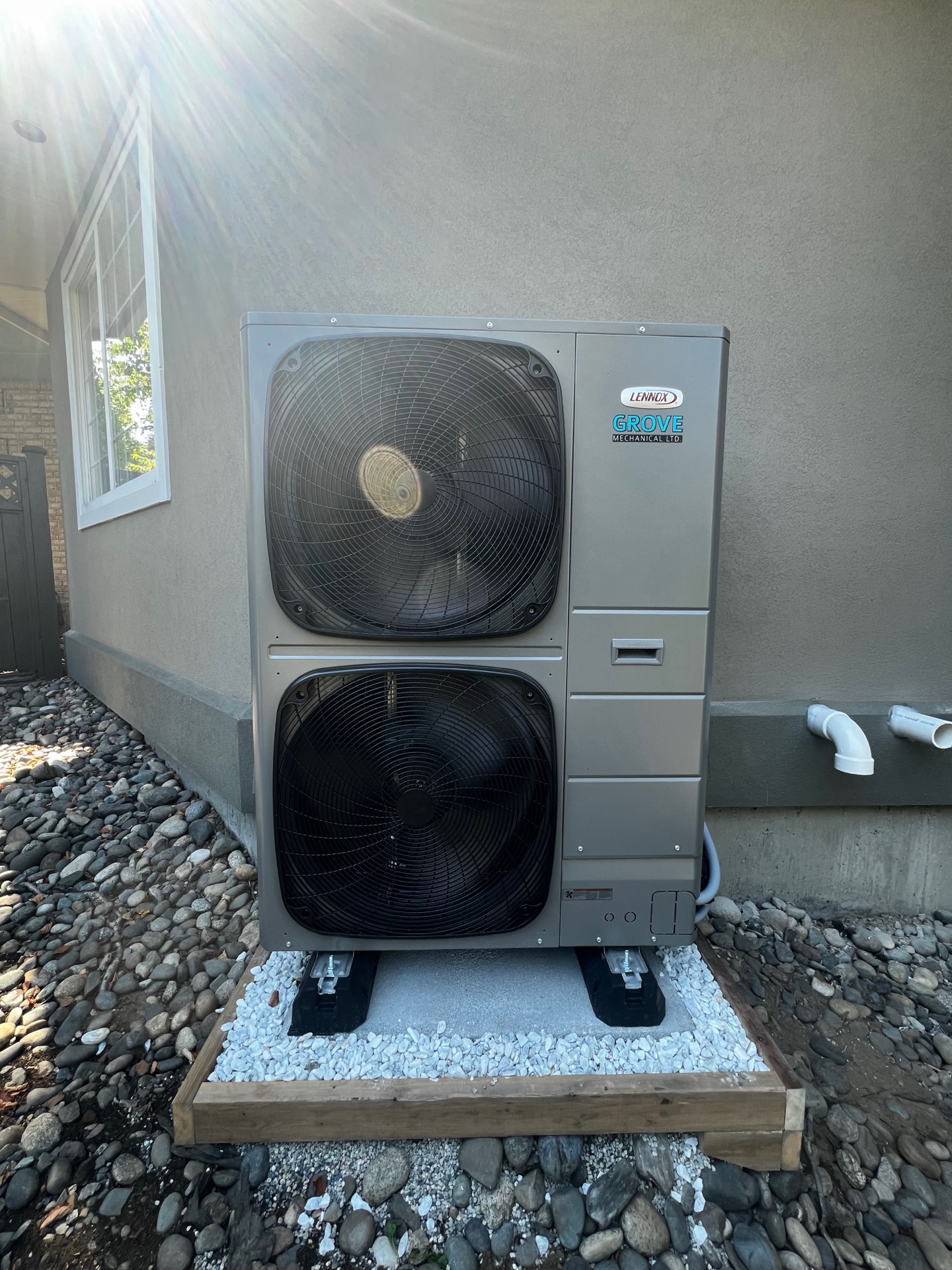
In this Grove furnace and cold-climate heat-pump project, the work included a high-efficiency furnace, heat pump, return-air redesign and PureAir filtration. The installation was approached as a coordinated comfort system rather than an outdoor-unit purchase alone.
This project demonstrates the installation scope, not measured customer utility savings. We do not have a verified before-and-after bill comparison to publish for this home. The practical lesson is to ask what the quote includes for airflow, controls, equipment matching and testing—not just which brand is being offered.
How to compare your bills without drawing the wrong conclusion
Start with the electricity and gas usage totals, not only the dollar amounts. Compare the same number of billing days and account for colder weather, rate changes and thermostat settings. A cold January after installation is not directly comparable with a mild October before it.
For a useful discussion, have up to 12 months of electricity and gas usage available. Note any other changes, such as a new electric vehicle, additional occupants, a hotter thermostat setting or new summer cooling. A technician or energy advisor can help separate those changes from the heating system.
You can discuss usage totals during an assessment. Do not upload unredacted utility bills, account passwords, SINs or tax returns through Grove’s quote form. An equipment photo and a short description of your current heating are enough to start.
Keep rebate savings separate from running costs
A rebate can affect the eligible upfront purchase or installation cost. It does not determine next winter’s Hydro bill. Compare the written project cost, expected running-cost assumptions and your comfort priorities separately.
Our federal-versus-FortisBC guide explains the different program paths, and the rebate hub links to current official requirements. Do not add federal and FortisBC dual-fuel rebate headlines together or assume an unapproved rebate will come off the invoice. Eligibility and payment belong to the program administrator.
Frequently asked questions about heat-pump electricity bills
Will my Hydro bill go up if I replace a gas furnace with a heat pump?
Usually, the electricity used for heating increases because the heat pump is taking over work previously done with gas. Your gas heating use may fall. Compare the combined electricity and gas costs over similar weather and billing periods, not the Hydro bill alone. Lower total heating costs are not guaranteed.
Is dual fuel always cheaper to run than an all-electric heat pump?
No. Dual fuel uses both an electric heat pump and a gas furnace. The running cost depends on fuel rates, equipment performance, how much heat each supplies and the permitted control settings. Keeping gas service also keeps its basic charge. Compare the home and complete system rather than assuming one option is always cheaper.
How much electricity will a heat pump use in my home?
There is no single figure that fits every Lower Mainland home. Electricity use depends on the home's heating requirement, insulation, outdoor weather, selected system, thermostat settings and backup heat. A heat-loss and equipment review is needed before treating an estimate as home-specific.
Can I stop paying the gas basic charge after installing a heat pump?
Only if gas service is no longer needed and the account is closed under the utility's requirements. A gas water heater, fireplace, range or backup furnace can keep the gas account active. Have any gas disconnection planned and completed through the utility and an appropriately licensed contractor.
Do heat-pump rebates guarantee lower heating bills?
No. Rebates affect the eligible purchase or installation cost; monthly operating cost depends on the home, rates, equipment and controls. The federal government cautions that natural-gas households may not see heating bills decrease. Program administrators decide rebate eligibility and payment.
What should I bring to a Grove home assessment?
Your current heating fuel, approximate equipment age, comfort concerns and an optional equipment photo are a useful start. If you want to discuss running costs, have recent electricity and gas usage totals available. Do not send SINs, tax returns, account passwords or unredacted utility account documents through the quote form.
Get a clear plan for your Lower Mainland home
Grove Mechanical serves Metro Vancouver and the Fraser Valley, including Vancouver, Burnaby, Surrey, Langley, White Rock, Abbotsford, Mission, Chilliwack and Hope. We can review your existing system, comfort concerns, ducts and electrical requirements, then provide a written installation estimate.
Choose the system for your home—not just the lowest rebate-adjusted price.
Book a free in-home assessment, request an estimate with an optional equipment photo, or call 604-371-4949.
Prepared November 23, 2026. Operating-cost illustrations are not quotes, measured customer results or guaranteed savings. Grove Mechanical is an independent contractor and is not affiliated with or endorsed by BC Hydro, FortisBC or the Government of Canada.
Official homeowner sources
Natural Resources Canada: heat-pump installation, operation and costs
Government of Canada: National Heat Pump Rebate and gas-home cost caution
BC Hydro: residential flat rate
BC Hydro: residential tiered rate
BC Hydro: accepted tariff and rate riders
FortisBC: residential natural-gas rates
BC Hydro: heat-pump modelling assumptions